Facing Our Fears With Faith, Part 2
Ministries > Turning Point with Dr. David Jeremiah
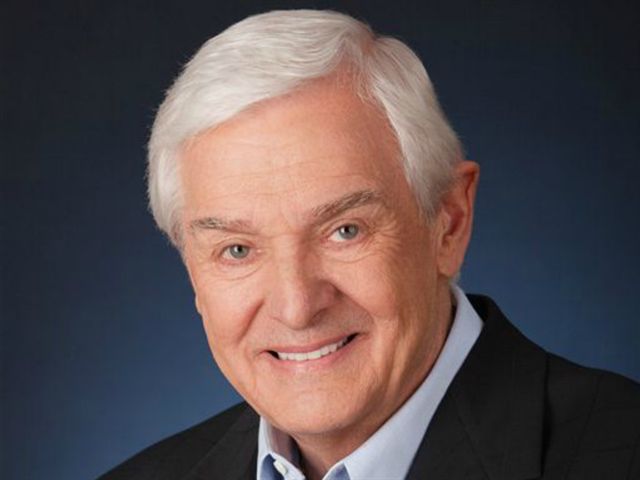
Some people deal with fear by learning self-defense or carrying a weapon. But if you’re a believer, your faith is the best weapon against fear! Today, Dr. David Jeremiah continues his look at how you can defeat fear with faith, straight from someone who conquered fear many times.
References
Guest (Male): If you're a Christian, you're armed with the most effective weapon available for overcoming fear. It's your faith. Today on Turning Point, Dr. David Jeremiah continues his look at four ways faith can help you defeat fear, straight from someone who faced down his fears time and time again. Returning to the 34th Psalm, here is David with the conclusion of his message, "Facing Our Fears with Faith."
Dr. David Jeremiah: Friends, we live in a fearful world. All you have to do is turn on the television at night and listen to the horrible things that have happened all over the world, and some of them close to where you live. If you're not careful, you can lay awake at night or throughout the day and meditate on how difficult it is to live in a fearful world. Maybe you have children and grandchildren, great-grandchildren as we do, and you worry for them because of all the dangers that lurk in the dark places. But the Bible tells us we don't have to live with fear. We can get up every morning and put our trust in God, and believe that God will care for us and be with us in every situation. We're talking about this whole issue as we study the 34th Psalm, which is one of my favorite portions of God's Word. We'll get back to it in just a moment, but first, let me encourage you to take advantage of the opportunity we provide at the end of this year for you to review your life and prepare for the New Year in a setting you wouldn't believe. We take a Caribbean cruise at the end of the year, leaving the day after Christmas. We're gone over the New Year and back shortly after in the meantime. We're studying the Word of God, worshiping Him, and enjoying a warmer climate in beautiful venues. We'd like you to come with us. We hope you'll think about it. You can go to our website and get all the information. That's davidjeremiah.org. We'll look forward to seeing you this December. And now with our hearts open and our minds open to the truth, here is part two of Psalm 34, "Facing Our Fears with Faith." It's a courageous thing to sing praise to the Lord when we don't feel like it. Mostly when we're afraid, we don't feel like singing to the Lord. To begin to lift up His name when we are cast down, the courage of obedience at this point may be the most important principle I have ever learned about dealing with the difficult moods and modes of life. Sometimes we have to do what we do out of obedience and watch how the Lord takes that and turns everything around for us. Sometimes we have to say, "Lord, I'm going to worship You today, and I do not feel like worshiping You, but here I go." One of the reasons we are so blessed in this generation is that we can carry worship and the means of worship around with us wherever we go in our CDs, in our cars, and on our phones. We're never away from the opportunity to plug in to some worship song that we know that honors the Lord and begin to lift up His name in praise. My suggestion to you in your fearful moments, when your anxiety starts to reach its fingers out and clutch at your heart, find some praise music that has meant something to you in the past, something that you know well, and just begin to sing it. Whether you are a good singer or not, lift your voice up in joyful praise to the Lord. Sing along with the singers on the CD. Praise the name of God. "Through It All" was written by a man named Andraé Crouch. The song came out near the time when I went through an experience with a sickness in my wife's life, which was very difficult for me. I took that song after I had just heard it for the first time, and I put it in my car. It was a cassette player—it wasn't an eight-track, so don't look at me like that. It was a cassette player, and I played that song over and over again. I actually wore the tape out. Through it all, through it all, I've learned to trust in Jesus. I've learned to trust in God. That song ministered to my heart and got me through that time. I learned the words, I sang with the musicians, and I've discovered that in almost every situation that God has put me in in my life, He's given me a song. When I came back here for the first time after having been gone to take the therapy for the cancer I had, the choir knew the song God had given me. They sang it the first day I came back, and I was melted on the front row listening to it. I want you to know when you're going through a time of fear, here's what you should do: "Lord God, give me a song." Go back through the music you know and ask God to give you a song and let that song play on the CD of your heart. God will begin to wipe away the fear and anxiety from your life. What did David do? He offered up worship to the Lord. Secondly, when we are afraid, we can own our own problem. It is interesting that David comes before the Lord at this moment and he is filled with humility. David is not arrogant; he is filled with humility. Look down at your Bibles in the 34th chapter in the Psalm and notice verse six. "This poor man cried out, and the Lord heard him." David didn't say, "This strong man," because he wasn't feeling all that strong. He'd just been totally embarrassed. He had to fake insanity to escape the situation he got himself in because he walked away from the direct paths of God. This poor man cried out to God, and God didn't say, "No, I only accept the strong." No, this poor man cried out and the Lord heard him and delivered him from all of his fears. One of the things that's very difficult for us to learn how to do as Christians is to be honest in our prayers. Somewhere along the way, we got the idea that even in our private time, our prayers have to be very proper with all the right language and all of that. But David doesn't give us any way to follow that pattern. For in this passage of scripture, over and over again, we discover different terms for prayer that David uses. He realizes his own weakness. He says, "I am poor." In essence, he was. He'd had no food, he had no weapon until he borrowed one, and he was alone and abandoned. But he cried out to the Lord. You say, "Pastor Jeremiah, how do I do this? What do you want me to say?" Say what's in your heart. Maybe a good place to start would be, "Lord, I am afraid of," or "because," and fill in the blank. What do we usually do? "Lord, help me in my time of fearfulness." No, no. "Lord God, I come to You today because I'm so fearful of the future. I thought we had the future laid out, and the future disappeared during this time. Lord God, what do we do? I feel the fear clutching at my heart." Whatever it is, tell the Lord in living color. Read the Psalms and you will discover David left nothing out. David cried out to the Lord, and in his words, he told God exactly how he was feeling. You say, "Well, didn't God already know?" Yes, but God wanted to know that David knew. David cried out, and I find that to be so helpful to me. That's what happens when I journal. I become very precise in what I tell the Lord, and it's usually far more definitive than the generalities that usually find their ways into our prayers. He offered up praise, he owned his own problem, and then he overcame through prayer. "This poor man cried out, and the Lord heard him." In this passage of Scripture, there are a number of phrases for prayer. Some of them are pretty interesting. Verse four: "I sought the Lord." Verse six: "this poor man cried out." Verse ten: "those who seek the Lord." Verse 17: "the righteous cry out." Interestingly enough, the term "cry out" is twice found in this list, and it's a very interesting term. I'm going to go back to speak at the Brooklyn Tabernacle in New York City, and I have so many wonderful memories of that church because I was there during some challenging days in my life. I was there first of all when I had found out that I was sick, and those people all promised to pray for me, which was such an encouragement. I went back after I had gotten better, and that's when I found out that those people have a different way of intercession. One after another, they came up to me and they said to me, "Oh, Dr. Jeremiah, we cried out to God for you." Every one of them said that: "We cried out to God for you." They didn't say, "We prayed for you," or "We asked God to heal you." They said, "We cried out to God for you." How many of you know there's prayer and then there's crying out to God? All of us have cried out to God in moments of fear and uncertainty. We don't worry about being proper then, do we? We get rid of all our "thees" and "thous" and we divorce ourselves from a commitment to Christianese, and we just tell God what's in our heart. Cried out to God. Perhaps you're among those who sometimes say to me, "Well, Pastor, I cry out to God and I pray and it doesn't seem like anything gets better. This thing is a gigantic struggle for me, and I don't know if I want to go through it again." I was reminded of a passage of writing by C.S. Lewis that's in *Mere Christianity*, the primer on Christianity that he gave us. It's something that I think we all ought to take to heart today. Here's what C.S. Lewis says about the issue of our moods and our feelings when we pray. He says, "Faith is the art of holding on to things your reason once accepted, in spite of your changing moods. For moods will change, whatever view your reason may take. I know that by experience. Now that I am a Christian, I do have moods in which the whole thing looks very improbable to me. But when I was an atheist, I had moods in which Christianity looked terribly probable to me. That is why faith is such a necessary virtue." Unless you teach your moods where to get off, you can never be a sound Christian. Isn't that true? If you let your Christianity be ruled by your moods, you end up, as C.S. Lewis tells you, a creature dithering to and fro, with its beliefs really dependent on the weather and the state of one's own digestion. That is not a very good foundation for your faith. In these days of fearfulness, we have a choice to make. Even when we don't understand, maybe we feel like the ceiling is brass and our prayers aren't getting out of the room. What we need to do then is really concentrate on what we know. We need to say, "Lord God, I don't understand why this continues or why I do not sense an answer from You. But what I do know is that You're a loving God, that You sent Your Son into this world for my salvation, and You've promised that in the giving of Jesus, You would also give us freely all things. I know that You answer prayer. I may not feel that You're answering mine, but I know that You have heard me. I continue to wait for the answer, and I will not be dissuaded by the fact that I'm having a bad day." That's where our faith enters into our fears. That's when we decide that we have a choice that we can make. We can listen to God's Word and take our cue from Him. I know things are scary, just as for me as for you, but I've chosen to take my cues from the Almighty. Finally, when we are afraid, we can obtain God's provision. I can only summarize this, but let me tell you that several times in this Psalm, we are told that when David prayed, God heard and He delivered him. That was the message of the Psalm. In fact, the words "saved" or "delivered" are found six times in the Psalm. Verse four: "He heard me and delivered me from my fears." Verse six: "The Lord heard him and saved him out of all his troubles." Verses 17 and 18: "The righteous cry out, and the Lord hears and delivers them out of all their troubles. The Lord is near to those who have a broken heart and saves such as have a contrite spirit." Verse 19: "Many are the difficulties of the righteous, but the Lord delivers him out of them all." How many of you know that when we pray to God in the time of fear, He delivers us? He may not take the fearful thing away, but He delivers us from the spirit of fear and gives us the spirit of love and power and a strong mind. How many are thankful for the deliverance of the Lord here? Amen. Not only does God give us deliverance, He gives us the Deliverer. Notice what it says in Psalm 34:7. "The angel of the Lord encamps all around those who fear him." Let me just break that out for you. You know who the Angel of the Lord is? It's the Lord Jesus Himself. You say, "This is the Psalms; He doesn't come until Luke." In the Old Testament, in several places, we have what we call the pre-incarnate appearance of Jesus Christ. The theological term for it is a Christophany, an appearance of Christ in the Old Testament before He is actually born. Somebody says, "How does that happen?" Well, the same way that happened when Jesus was born of a virgin without the agency of a man and became the miracle child. If God could bring Him into the world for the 30 years He was on this earth that way, don't you think He could give Him an opportunity to visit now and again before He came? And He did. In certain situations, the Lord Jesus appears as a theophany, a Christophany in the Old Testament, and here's one. The word "Angel of the Lord" appears three times: once in Psalm 34 and twice in Psalm 35. The Angel of the Lord is the Lord Jesus Himself, pre-incarnate Jesus. David said, "When I was in fear in the cave and I was overwhelmed with what had happened and what was happening, the Angel of the Lord encamped all around me." What I want to tell you friends is this: when you go through your time of fear, God not only promised you deliverance, He promises you the Deliverer Himself. He comes to set up His camp in your heart and the most fearful time you will ever have as a follower of Christ will probably be the time when you sense the presence of the Lord like you have never sensed Him before because the Lord delights to encamp in the trouble and terror of His people. He comes Himself to bring us encouragement. The presence of the Lord. I've been there once or twice when I felt as if I could reach out and touch Him. I don't have that experience often. Both of them were times when I was very much afraid. Oh, how blessed we are to know this, that if we trust the Lord and we worship Him and we pray to Him and we tell Him what's in our heart, the Lord promises to deliver us from our fears and to send the Deliverer Himself into our very lives. If I were a fearful person, and I don't think I am—I've had my moments, but I don't live there—but if I were a fearful person, I probably would go and buy Max Lucado's book. I don't have any stake in that, but it's a great book. But I think the most practical thing I would do would be to take the verses that are in the Bible that promise us the Lord's help in times of stress, and I would get acquainted with them. I thought what I'd do today as we close is just give you my favorite ones. I have about six or seven. Write down the address; that's very important, and I'll tell you what to do with that address. Write down every Scripture's address. The address of the first one is Deuteronomy 31:6. "Be strong and of a good courage and do not fear nor be afraid of them, for the Lord your God, He is the one who goes with you. He will not leave you nor forsake you." Deuteronomy 31:6. Psalm 27:1. "The Lord is my light and my salvation, whom shall I fear? The Lord is the strength of my life, of whom shall I be afraid?" Psalm 27:1. Psalm 56:3. "Whenever I am afraid, I will trust in You. In God, I will praise His word. In God, I have put my trust. I will not fear. What can flesh do to me?" Psalm 56:3. Psalm 118:6. "The Lord is on my side. I will not fear. What can man do to me?" Proverbs 3:25 and 26, for those of you who fear terrorism and what can happen in our nation, here's a great one. "Do not be afraid of sudden terror, nor of trouble from the wicked when it comes, for the Lord will be your confidence and will keep your foot from being caught." Proverbs 29:25. "The fear of man brings a snare, whoever trusts in the Lord shall be safe." And maybe the best of all, Isaiah 41:10. "Fear not, for I am with you. Be not dismayed, for I am your God. I will strengthen you. Yes, I will help you. I will uphold you with my righteous right hand." Now I've given you these verses in the order in which they appear in the Bible. Here's my suggestion: if you can remember one of them, I'm going to tell you how you can remember all of them. Go to the first verse that I gave you, which is in Deuteronomy, and in the margin of Deuteronomy 31:6, write Psalm 27:1. Go to Psalm 27:1 and in the margin of Psalm 27:1, write Psalm 56:3. Do that in all of these passages, and when you get to Isaiah 41:10, write Deuteronomy 31:6. If you find one of them, you've found them all. Amen? I'm counting on the fact that you might be able to remember one out of all of these. That's how I work. But what a blessing when you find your own little reference that you put in your own Bible to help you in times of fearfulness, and then read those verses, just follow them through, and you'll never forget them. God will use His word to strengthen your heart and to bring peace in the times of fear. There's one other verse about faith. I'm not even going to ask you to turn to it. I'm just going to tell you what it says. There's a verse in the New Testament that says that there are some people who live all of their lives in the bondage of fear because of their fear of death. It goes on to say that Jesus Christ came into this world to remove that bondage and to take away that fear. Perhaps the greatest fear that we face, and certainly the most powerful and the final one, is the fear of death. The Bible says that God has made a plan for us so that the fear of death never has to be an issue for us again. Now, I want to say this and I don't want you to think I'm trying to be spiritually arrogant: I am not afraid of death. I don't want to die; please don't get those two things mixed up. I am not afraid of death, and I don't want to die. But I know a lot of people that death to them is a terror. For them, death is something they can't deal with, something they can't even talk about. Death is the undiscussed subject. Here's what the Bible says: when you get Jesus as your Savior, the fear of death, you can take it off your list. You don't have to be afraid again. You know why? Because the Bible says when He comes to live within your heart, He takes away your sin and He makes you fit for heaven. When you die, you don't really die. You just go in the ground as a body and your soul goes immediately to be with the Lord, awaiting the rapture when our bodies will be resurrected and we will spend eternity with the Lord. Do you know how the Bible says it for a Christian? "Absent from the body, present with the Lord." When I die, I just got graduated. That's all. I went to be with the Lord. I'm not afraid to die. I don't want to die—got a lot of living yet I want to do here on this earth, and I want to serve the Lord for as long as I can. But I don't lay awake at night thinking, "Oh my goodness, what if I die?" The Bible says that if you put your trust in Jesus Christ, you will never die. You say, "Now, Pastor, that can't be right." No, no, it's right. What that means is you will never die spiritually. You know what it means to die spiritually? It means to be separated forever from God. Spiritual death is similar to physical death. Physical death means to be separated from your body. But spiritual death means you are separated from God forever and there is no cure for that problem. The only way you can be sure you will not die spiritually is to accept Christ as your Savior and your Lord. The old adage is this: born once, die twice. Born twice, die once. And maybe not even then, because I think we're going to be around when the Lord comes back. We might even beat the first death. So here's my question to you: do you want to spend the rest of your life, wherever you are on the age cycle, wondering and worrying and being afraid of death, or do you want to settle it once and for all and say, "Lord Jesus, thank You for coming into this world to pay the penalty for my sin. I receive You as my Savior, I accept what You did on the cross as full payment for my sin, I know that one day I will be with You forever, and I am not afraid of what's coming in the future because my hand is in Your hand." I covet that for every person. I can't fix all of your fears, but I can help you fix that one if you put your trust in Him. Amen.
Guest (Male): You know, there's a lot of people out there with man-made formulas to tell you what to do when you have anxiety or fear. But I just find reading the Bible, you find some of the greatest principles for dealing with that that you will find anywhere. It reminds me that all truth is God's truth. If it's true, it ultimately originated with God. And instead of going through all the layers, why don't you just go to the source itself, the Word of God, and find out what He has to say about what's going on in your life. If you read widely in the Word of God, you will find the truth. We're trying to help you do that by bringing some of the key passages together in this series called "Making Sense of It All: Seeing the World with a Biblical Perspective." And we'd like you to know that these passages are powerful for you. Hey, don't forget we have a magazine that adds value to your life as well. It coordinates all the things we're talking about on the air. It gives you much to look at and read and study and meditate upon. Ask about it when you call or write today. Today's message originated from Shadow Mountain Community Church and senior pastor Dr. David Jeremiah. Drop us a line and let us know how God is using this ministry in your life. Write to Turning Point, PO Box 3838, San Diego, California 92163. Visit our website at davidjeremiah.org/radio or call 800-947-1993. Ask for your copy of Robert J. Morgan's book *100 Bible Verses that Made America*. It's yours for a gift of any amount. You can also download the free Turning Point mobile app to instantly access our content. Search the app store for the keywords Turning Point Ministries. Visit davidjeremiah.org/radio for details. This is David Michael Jeremiah. Join us tomorrow as we continue the series "Making Sense of It All" on Turning Point with Dr. David Jeremiah.
Related Episodes
Facing Our Fears With Faith, Part 1
Monday, July 20
A Prayer From a Cave, Part 2
Friday, July 17
A Prayer From a Cave, Part 1
Thursday, July 16
Related Videos
About Turning Point
Turning Point's Mission: Delivering the Unchanging Word of God to an Ever-Changing World
About Dr. David Jeremiah
Dr. David Jeremiah is the founder of Turning Point for God, an international broadcast ministry committed to providing Christians with sound Bible teaching through radio and television, the Internet, live events, and resource materials and books. He is the author of more than fifty books including The Book of Signs, Forward, and Where Do We Go From Here? David serves as senior pastor of Shadow Mountain Community Church in San Diego, California, where he resides with his wife, Donna. They have four grown children and twelve grandchildren.
Contact Turning Point with Dr. David Jeremiah
Mailing Address
USA
Turning Point
PO Box 3838
San Diego, CA 92163
CANADA
PO Box 70509 RPO Oak St
Vancouver, BC V6M 0A3
UNITED KINGDOM
PO Box 1532
Hemel Hempstead
HP1 9QX
Phone Number
USA
1-877-998-0222
CANADA
800-946-4300
UNITED KINGDOM
0800-058-2856


